
The Importance of Testing
Private wells are not regulated or tested by the state of Michigan. Therefore, it is important for you to know what human made and natural contaminants might be in your well water, for both your health and safety. EGLE recommends testing your well annually. (Information on this page is courtesy of EGLE.)

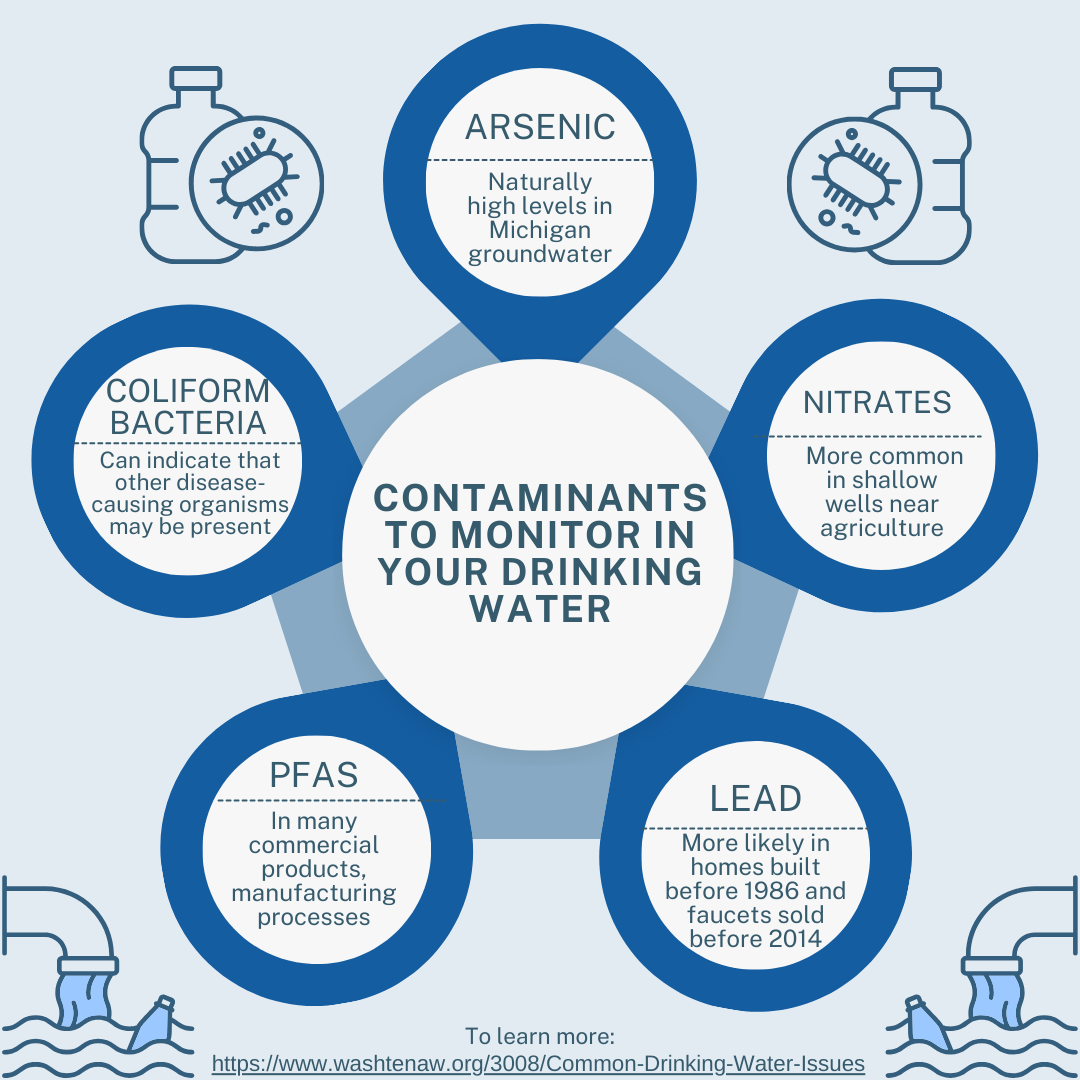
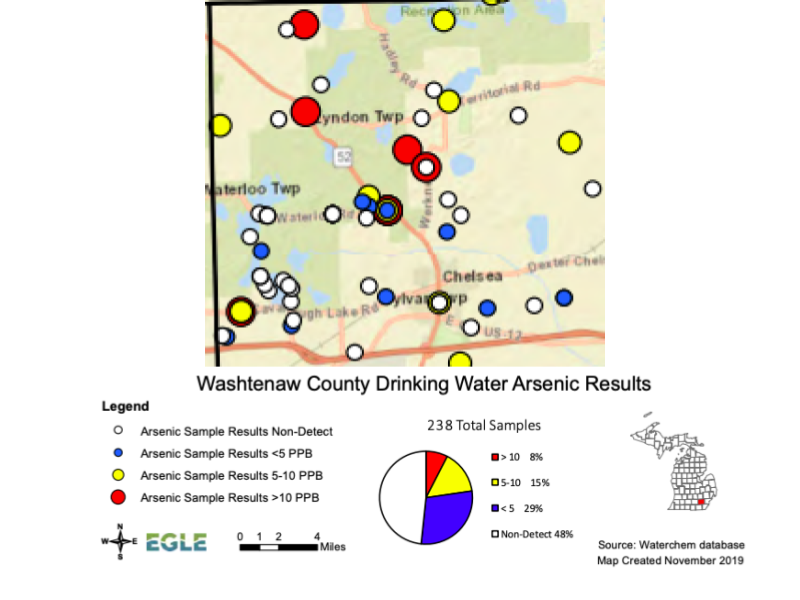
Arsenic is naturally found in soil and rocks and was previously used in many products like common pesticides. The most common way arsenic enters the lakes, rivers, and groundwater that becomes your drinking water is by moving through soil and rocks. Most areas in Michigan have naturally occurring arsenic in the groundwater. In some of these areas, natural levels are already considered high.
Arsenic can be very harmful to your health. The Michigan Department of Health and Human Services (MDHHS) recommends
that if arsenic was detected in your water testing but is under 0.010 mg/L, you should consider a drinking water filter.
If arsenic was detected over 0.010 mg/L, do not use your water for drinking, cooking and mixing powdered infant formula until you reduce your exposure.
Drinking water with too much arsenic can cause:
- Skin Darkening
- Warts or corns on palms, soles of feet, and other body parts
- Risk of Cardiovascular disease
- Higher risks of skin, liver, bladder, and lung cancer
- Stomach Pain
- Nausea
- Vomiting
- Diarrhea
Don’t worry though. If your well is contaminated EGLE has provided actions you can take.

Nitrate (NO3) and nitrite (NO2) are both forms of natural and man-made nitrogen in the environment. When nitrate seeps into the ground it can get into drinking water. Nitrate is more likely to enter your water if you have a shallow well, damaged well casings, and fittings, a well not within a clay barrier underground, or nearby unplugged or abandoned wells. Nitrogen usually comes from fertilizers, agricultural waste, and failing septic systems/drain fields.
Large amounts of nitrates in drinking water can be harmful to a person’s health because nitrate can change into nitrite in the human body.
Swallowing high amounts of nitrates and/or nitrites can cause a condition called methemoglobinemia (met·he·mo·glo·bi·ne·mia). This condition affects the blood’s ability to carry oxygen. Infants younger than six months of age and pregnant women are more at risk of developing this condition. Others can develop this condition too, such as those with genetic conditions or reduced stomach acidity. It’s important to talk with your doctor or your child’s doctor if you have concerns about methemoglobinemia.

Most coliform bacteria are not harmful. However, some can make you sick. A person that has been exposed to these bacteria may have an upset stomach, vomiting, fever, or diarrhea. Children and the elderly are more at risk from these bacteria. Take E. coli bacteria seriously when found in drinking water. Some E.coli can make you sick or even cause death.
When coliform bacteria are washed into the ground by rain, melting snow, or irrigation, it can get into drinking water. Coliform bacteria can be from: agricultural sites like pastures & feedlots, woodlands, animal waste, and/or poorly maintained septic systems.
Coliform bacteria can also enter your water through damaged wellheads, not properly disinfected wells, nearby abandoned wells, and water pipes connecting to non-drinking water sources, e.g. garden hoses, laundry sinks, and waste water sites.
EGLE Recommendations:

The most common source of lead in drinking water is plumbing made with lead, such as pipes, fittings, fixtures, and faucets. Homes that get water from a shared or private residential well may have lead in parts of the well system, like a packer or brass components of a submersible pump and may corrode and add lead to water.
Older faucets, fittings, and valves made before 2014 may contain up to 8% lead even if marked “lead-free” and may corrode, adding lead to water.
Federal and state-wide recommendations suggest
- using a certified lead-reducing filter
- consistently keeping your water moving through everyday activities like washing dishes and doing laundry
- and most importantly, letting cold water run for 3 minutes before drinking or cooking with it
- cleaning your faucet screens, known as aerators
If you are concerned about lead in your drinking water, go to https://www.michigan.gov/MiLeadSafe to learn more about the following ways you can reduce your exposure.