Welcome to Lyndon Township’s dedicated resource hub for septic system education and support. Developed in collaboration with University of Michigan students, this platform serves as a library of trusted information to help residents better understand, maintain, and manage their septic systems. While the township did not create these materials, we have curated a collection of resources to make essential information easily accessible.
Understanding how your septic system functions is the first step to ensuring that it is properly maintained.
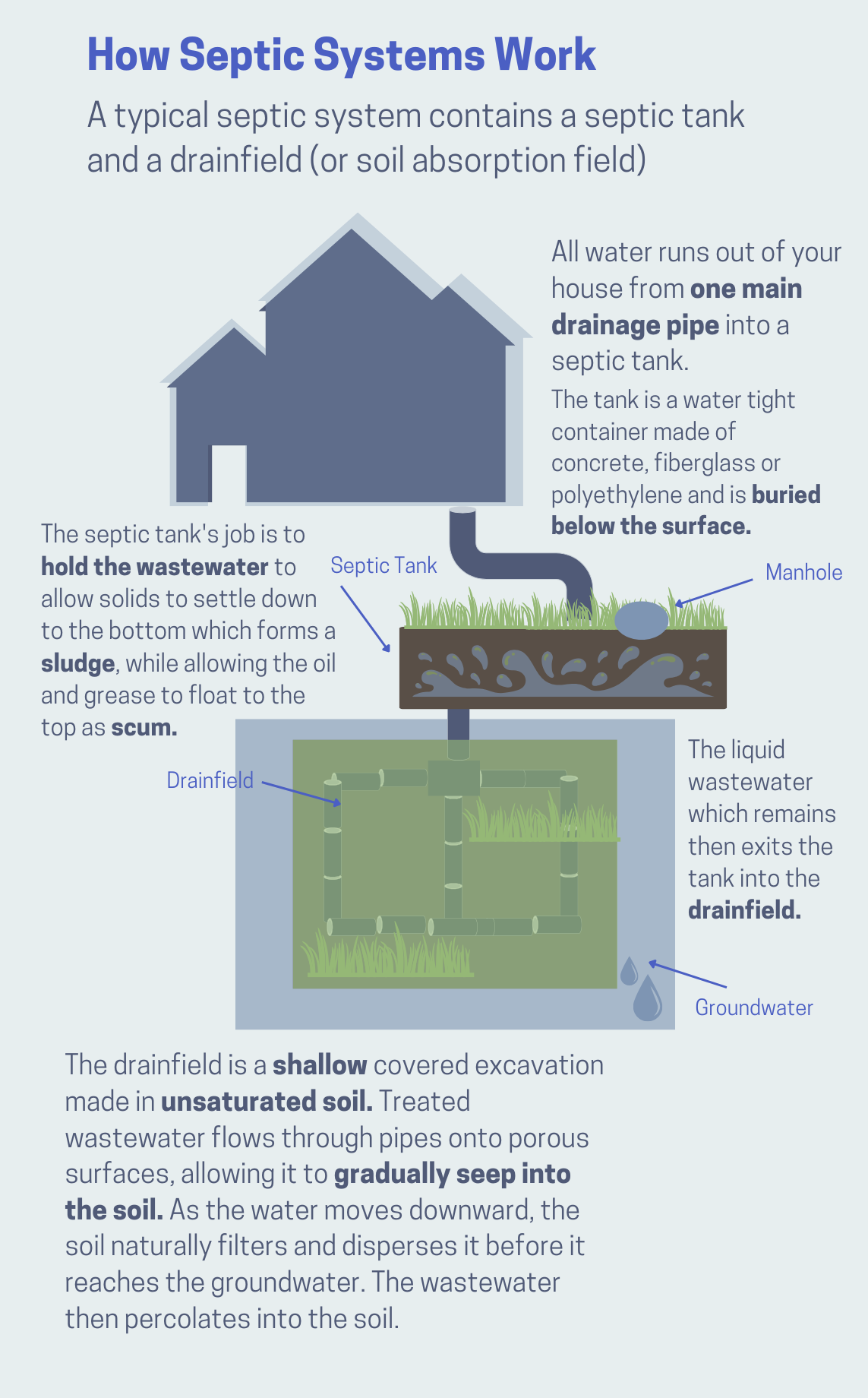
Septic systems are underground wastewater treatment structures that use a combination of natural and technological processes to treat wastewater from household plumbing produced by bathrooms, showers, kitchen drains, and laundry.
A typical septic system contains a septic tank and a drain field (or soil absorption field).
All water runs out of your house from one main drainage pipe into a septic tank.
The tank is a watertight container made of concrete, fiberglass, or polyethylene that is buried below the surface.
The septic tank’s job is to hold the wastewater to allow solids to settle down to the bottom which forms a sludge while allowing the oil and grease to float to the top as scum. Compartments and a T-shaped outlet prevent the sludge and scum from leaving the tank and traveling into the drain field area.
The liquid wastewater which remains then exits the tank into the drain field.
The drain field is a shallow covered excavation made in unsaturated soil. Treated wastewater flows through pipes onto porous surfaces, allowing it to gradually seep into the soil. As the water moves downward, the soil naturally filters and disperses it before it reaches the groundwater. However, if the drain field becomes overloaded with excess liquid, it can become saturated, leading to sewage surfacing on the ground or causing backups in sinks and toilets.
To install a new Septic System, follow the regulations set by Washtenaw County.
The Washtenaw County Department of Planning and Environment will review and issue permits based on the following information:
Existing available records, soil maps, information on the wells of surrounding properties, USGS topographical maps, aerial photos, municipal water, and sewer plans.
To make any changes to a privately owned community sewage system a notification of intent.
This should contain:
Name and address of the applicant.
Engineering plan showing potential locations of the pertinent major features of the POCSS.
Documentation of the necessary steps and the level of efforts taken by the developer to ensure compliance with local zoning.
Documentation of the unavailability of municipal sewer.
More information on the requirements and regulations of Washtenaw County can be found here.
For information on the requirements for inspections of residential onsite water and sewage disposal systems at the time of property transfer, click here.
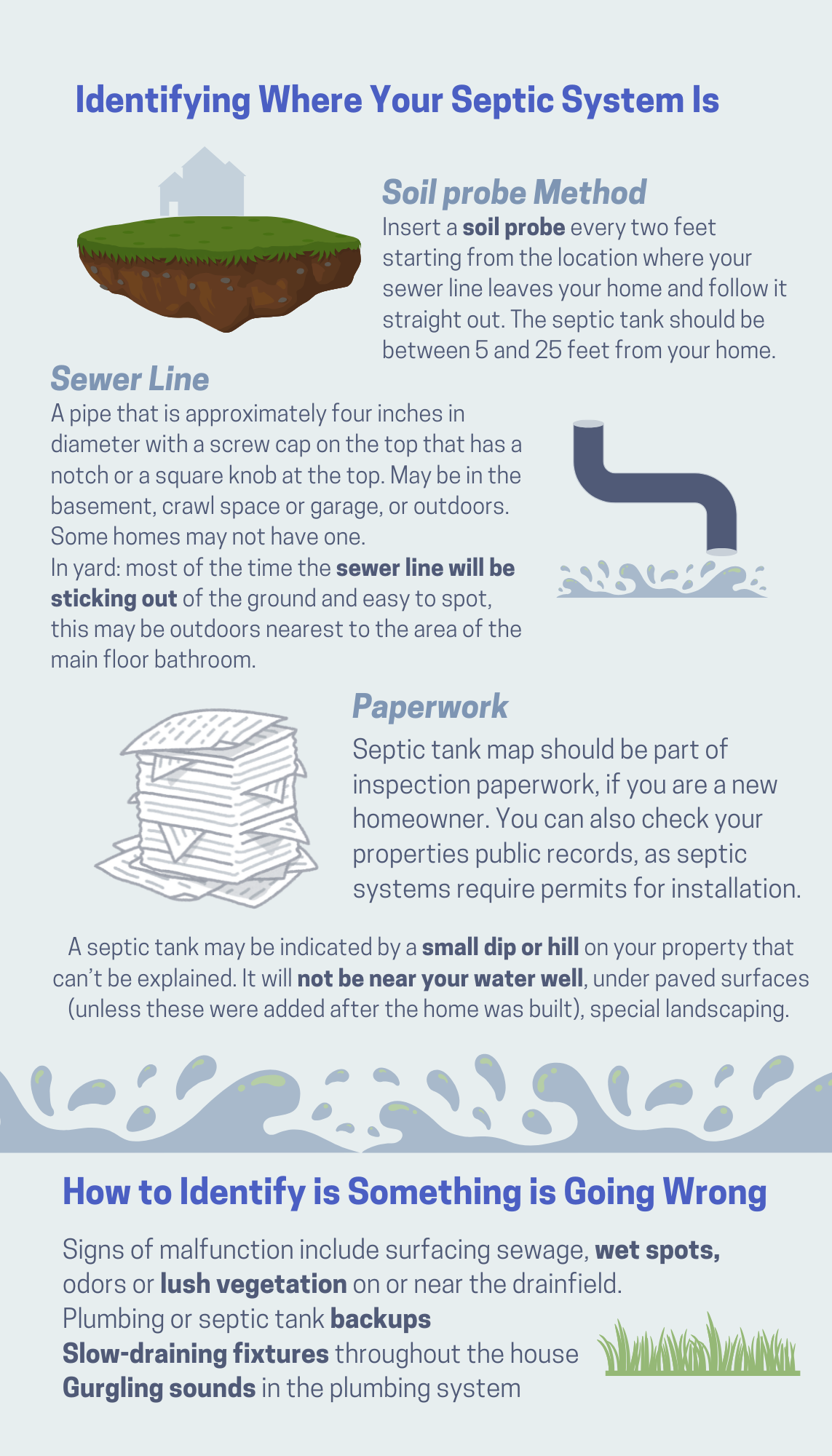
Soil probe Method: Insert a soil probe every two feet starting from the location where your sewer line leaves your home and follow it straight out. The septic tank should be between 5 and 25 feet from your home.
Sewer Line: A pipe that is approximately four inches in diameter with a screw cap on the top that has a notch or a square knob at the top. It may be in the basement, crawl space, garage, or outdoors. Some homes may not have one.
In Yard: most of the time the sewer line will be sticking out of the ground and easy to spot. This may be outdoors nearest to the area of the main floor bathroom.
Septic tank map should be part of inspection paperwork if you are a new homeowner. You can also check your properties’ public records, as septic systems require permits for installation.
A septic tank may be indicated by a small dip or hill on your property that can’t be explained. It will not be near your water well, under paved surfaces (unless these were added after the home was built), or special landscaping.
The Onsite Wastewater Management Unit, overseen by the Michigan Department of Environment, Great Lakes, and Energy (EGLE), works closely with local health departments to ensure safe wastewater management. For residents needing guidance on septic regulations, system approvals, or financial assistance, the Washtenaw County Health Department experts are valuable resources.
Contact information for key representatives is provided for further assistance:
Onsite Wastewater Management Unit Staff
The Onsite Wastewater Management Unit is a state-required service for local health departments to offer assistance and training to local health departments in the review and approval of land developments utilizing onsite wastewater systems.